Cultural Exegesis
of Zambia


My primary location during my internship was unique because I was in a remote area. Mkushi Mission Center was a 1.5 hour drive from the nearest full market and town and 4 hours from the mission headquarters. Fortunately, during my time there I got to visit the market, attended church (on the mission base), saw where the people go to sell and buy maize (the product that is eventually turned into shima), and walk to the home/farm of one of the Zambians with whom I became friends. These four locations all taught me something unique about the daily life of the Zambians I was getting to know.
Attending church was a valuable part of my internship because it opened my eyesto different ways of worship as well as experience unique cultural components of Zambians I would not have seen through teaching in the school.
First and Second Locations
The first location I visited was the market. The market was a 1.5 hour drive away from the area I was staying and was difficult for the community around me to visit. The only ways the community could get to the market was to take a bus, which most could not afford, or catch a ride with the missionaries when they went into town. Though this was difficult because the men were usually working during the day and the car had limited seats. When I arrived at the market, I easily saw why the Mkushi people were trying to get there when they had money. The market was a large grouping of stores in rows and columns with open air markets intricately woven between. Open air markets offered produce, spices, and unique food items while the stores housed items like cloth, medicine, and luxury clothing. The most different aspect of this type of shopping from shopping in the U.S. was the hygiene level. Hygiene is not a value within Zambian culture, while it is a value most Americans strongly hold. Visiting the market taught me about the value of community, the relational aspect of buying and selling, and highlighted the poverty in the area in which I was staying.
In addition to visiting the market, I experienced church on the mission base on a weekly basis. The Mkushi Christians gather on Sunday mornings to pray, worship, and hear a sermon. This is a time for truth to be proclaimed and misconceptions about the gospel to be cleared. The community valued church and came because they were hungry to hear directly from God’s word. I also learned that Zambians are not time-oriented. Every Sunday it would take at least thirty minutes for the chairs to be filled. Attending church was a valuable part of my internship because it opened my eyes to different ways of worship as well as experience unique cultural components of Zambians I would not have seen through teaching in the school.
Third and Fourth Locations
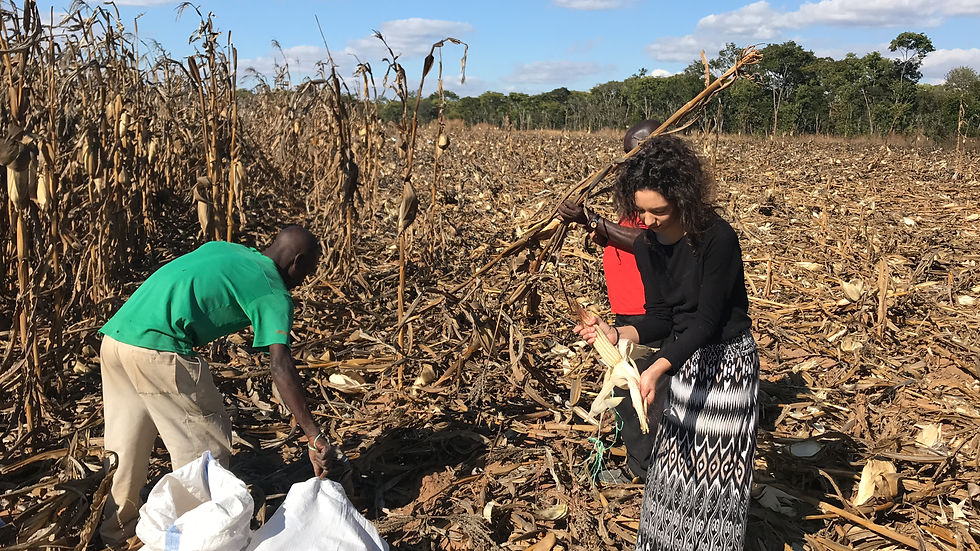
One surprisingly educational opportunity that presented itself was to visit a mill that grinds, buys, and sells maize. The buying and selling of maize is what fuels the Zambian economy, so to see it in action was a privilege. I learned that most Zambians depend on making a small income or providing food for themselves through growing, harvesting, and selling maize. Without maize, there is no food or money. The mill I visited had a long line of people outside of it waiting to have their maize ground. The waiting is a small price to pay for the substance such a practice provides. Whether it be in homes, trucks, storehouses, or on the side of the road, bags of maize were everywhere. I am thankful I was there to experience the short harvest season and participate in tangible ways.
The most impactful place of significance I visited was my friend Caroline’s recently constructed house. Her one bedroom house had just been completed and she invited me to come and see it. After a half hour walk through lightly trodden paths, one of the missionaries and I arrived at her home. Caroline was extremely excited to show us all of her belongings in her first ever place to call her own. The room was about the size of a queen size bed, but the smile on her face spoke volumes. The Lord had provided for her and she could not wait to share. This place was specifically important to me because of the personal element of the visit. Caroline and I had become friends during my six weeks in Zambia and seeing her home and sharing rice together towards the end of my visit personified the extent to which our friendship had affected both her and me. Between visiting the market, attending church, seeing the maize mill, and meeting Caroline at her home, I got a deeper look into how God has made the people of Zambia.